







1996 — Team Work
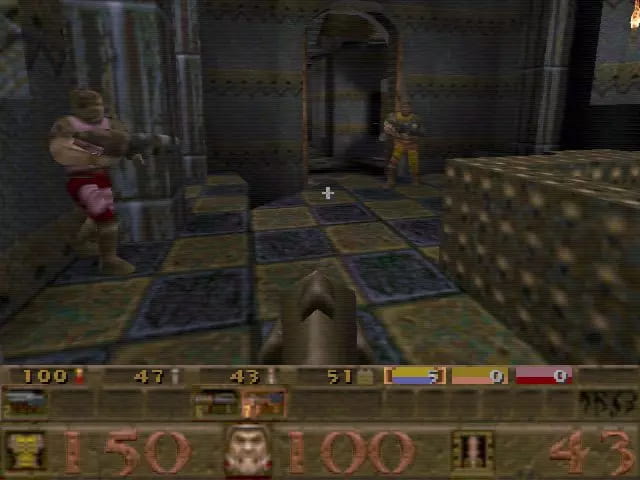
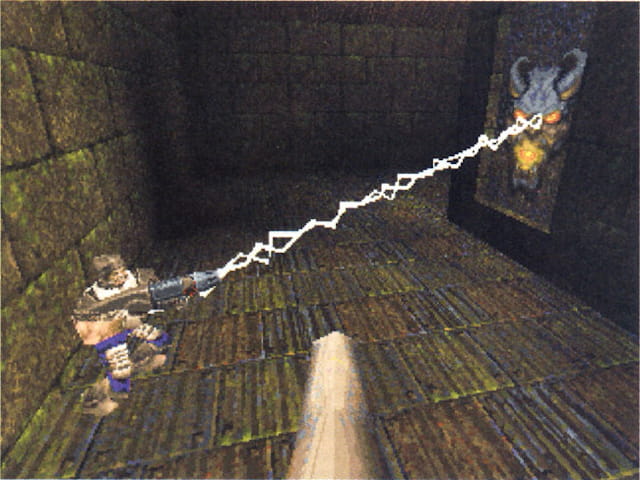
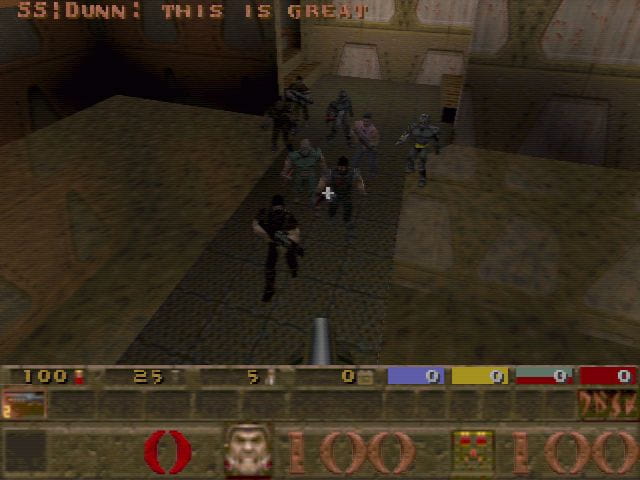
Where DOOM had been a flat plane with an ad-hoc illusion of height, Quake had actual 3D environments with a Y-axis. (We are obligated to mention that Duke Nukem 3D technically did this first.) With up and down came gravity, boost pads, explosive jumping, and all the movement tech that would define the arena shooter going forward.
Quake was also marketed to enthusiasts as the most moddable game yet made, with promises to let modders write scripts for custom game rules. It was after learning this, and after uncountable hours spent running Quake's QTest demo at cyber cafés, that a pair of geeky Australian twenty-somethings named Robin Walker and John Cook started preplanning on Team Fortress, as something team-and-tactics-based to run at LAN parties.
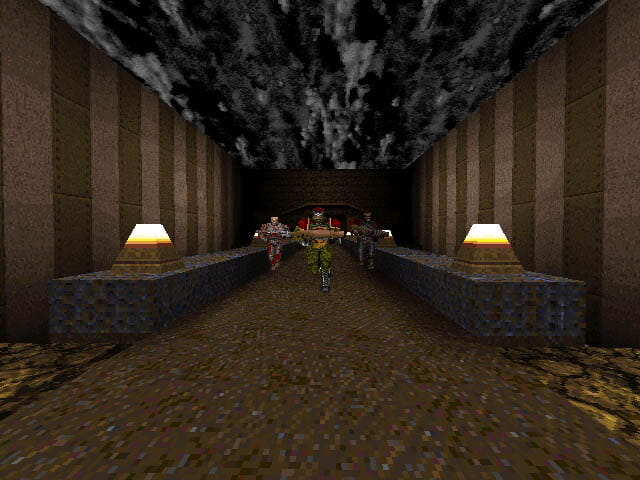
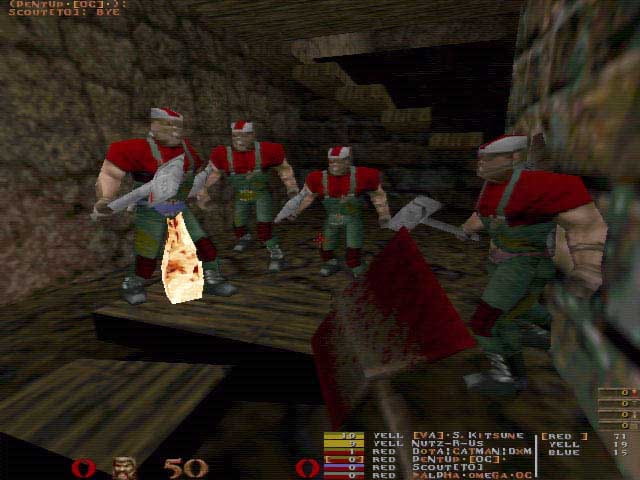
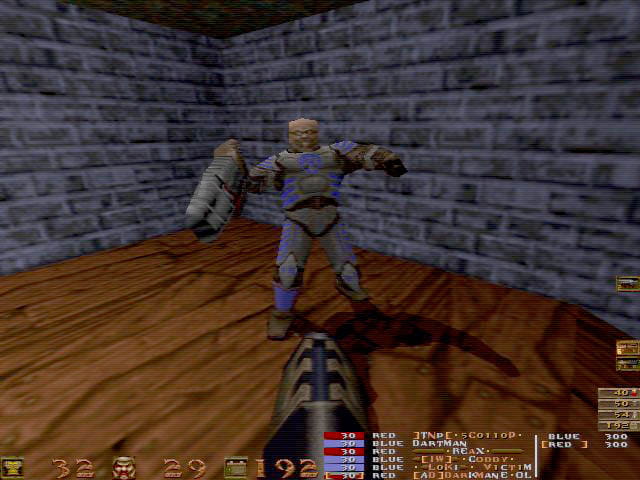
Released August 24, 1996
Walker and Cook, who would later incorporate as TeamFortress Software with Ian Caughley, were heavily inspired by a 2v2 DOOM custom map they'd encountered at LAN parties, called "Fortress". On Fortress, each team would pick their own starting loadouts, and raid the enemy duo's base for more powerful weapons while guarding their own stash. This central gimmick, of structuring a team like a Dungeons & Dragons party that synergizes their builds and covers each other's weaknesses, was a novel form of player expression in a PC shooter, and something you'd normally only get playing an RTS.
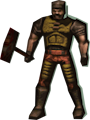
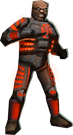
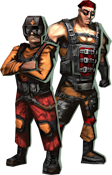
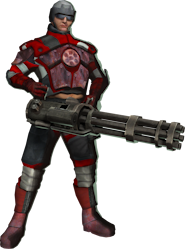
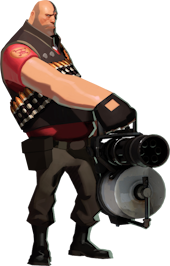
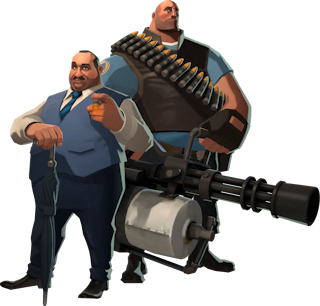
In practice, Team Fortress was just a set of game rules that locked players into pre-set loadouts, and added new guns like the Sniper Rifle to fill gaps in Quake's weapon lineup as needed. Much of its identity is owed to the community maps built around these game rules, like Canal Zone and the immortal Well and 2Fort. On top of the first five classes, subsequent updates added Heavy, Spy, and Engineer and Pyro — both of whom could deal damage without firing bullets, and so allowed even unskilled or laggy players to be useful.
(Version 2.0 onwards was released for QuakeWorld, a Quake multiplayer module that added lots of modern client/server networking features. This was when the game's popularity exploded, and is why you'll see this version called QuakeWorld Team Fortress.)

A History of Violence
Once, there was nothing. The desktop computer was a cold and uninviting appliance, fit only to receive suspicious emails from deposed African royalty and occasionally print out pornography. Would-be PC gaming enthusiasts stared morosely into their Solitaire windows, fingers twitching, bloodlust unsatiatied, wishing they could play a pulse-pounding sicko game where you jump over death pits and steal flags and kill people.
Then id Software released Quake, and the nascent online shooter community swarmed around it — and with it, the nascent online shooter modding community. Three Australian programmers, big men in their savage remote island's shooter scene, licensed out the QuakeC development suite on day one, and set to work on their long-planned team deathmatch mod of Quake, where players would choose their weapons from a few themed loadout presets. (Classes, as they came to be called.) This was Team Fortress, and it was scrimmaged at length by the Melbourne LAN scene before finally going up for download on a tepid winter day[1] in 1996.
As of today, we've been jumping over death pits and stealing flags and killing people for thirty years. In recognition of our forebears, and out of longing for the days when developing a video game mod could get you a real job, slip on the nostalgia goggles with us and get to '96ing.









© EMINOMA. Valve, the Valve logo, Steam, the Steam logo, Team Fortress, and the Team Fortress logo are trademarks and/or registered trademarks of Valve Corporation. Team Fortress 2 Classified is a fan creation and is not affiliated with Valve Corporation.
QUAKE and id Software are registered trademarks or trademarks of id Software LLC in the U.S. and/or other countries.